
Spandauers and cinnamon rolls meet robotics, cameras and artificial intelligence at Mette Munk, where the pastry manufacturer has collaborated with Robot Nordic and the Danish Technological Institute on an innovative automation solution.
In just a few seconds, an employee at Mette Munk must be able to spot a misshapen pastry among thousands of others.
It requires eyes like a hawk and precision that must never fail.
But when 35,000 pastries roll by per hour, many of which are different in shape, size and decoration, even the sharpest eyes get tired.
And that was precisely the starting point for an automation solution for the Odense company, which produces and distributes Danish frozen pastries to the whole world.
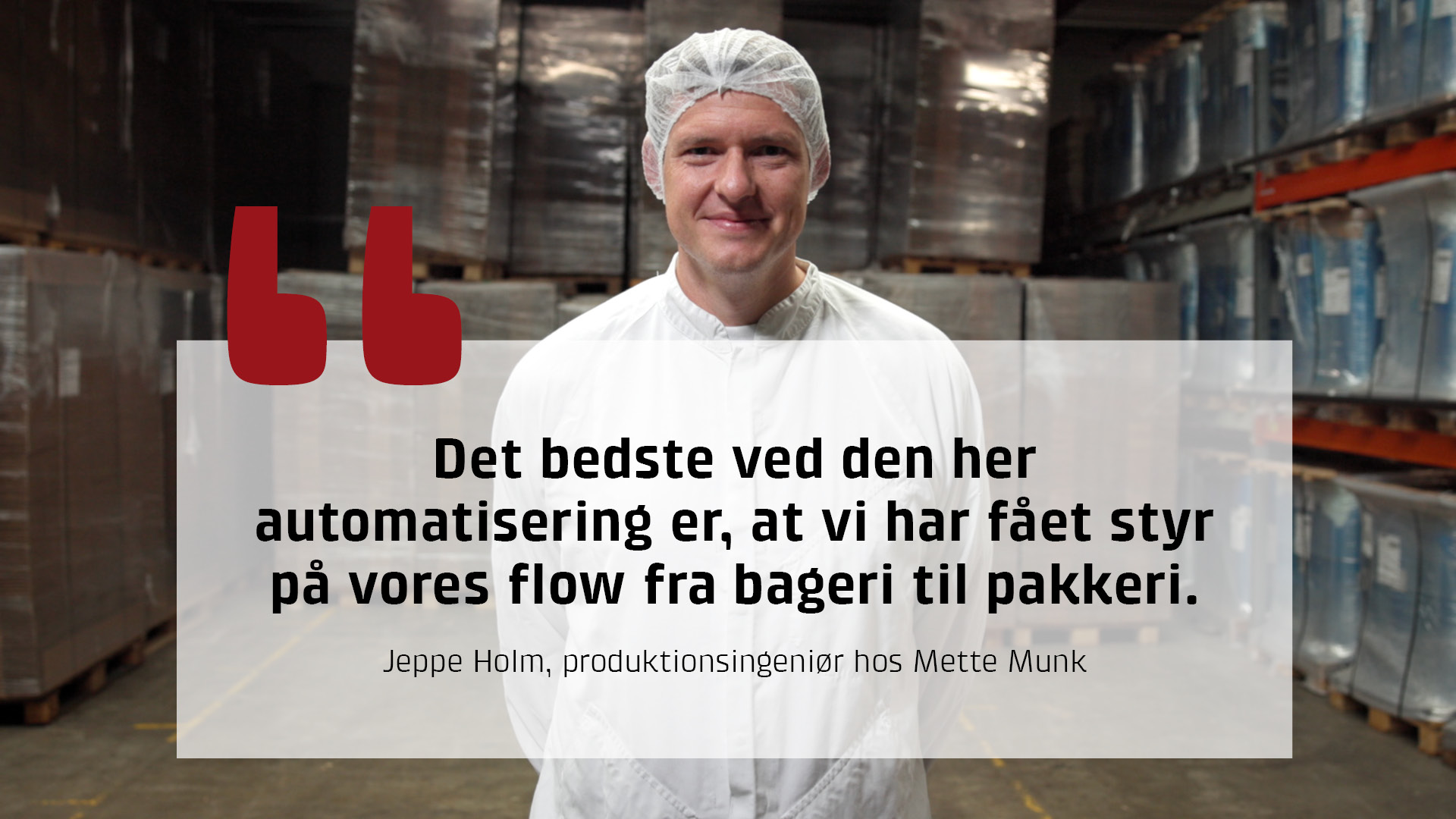
− The best thing about this automation is that we have gained control of our flow from bakery to packaging. In addition, we have achieved more uniform quality, where it is the robots and vision that sort out. And we have removed a lot of manual repetition from our employees, as it is now the robots that distribute these pastries into the correct rows, says Jeppe Holm, production engineer at Mette Munk.
Previously, the inspection was done by eye, routine and lots of repetitive work movements.
Now the technology − which was created in a collaboration between Mette Munk, Robot Nordic and the Danish Technological Institute − helps both quality and job satisfaction on the way.
The automation not only ensures a stable flow, but the system can also distinguish between and assess all the many variants on the line. The control includes everything from spandauers to cinnamon rolls, Viennese pecans and many other types of baked goods, where the filling, decoration and shape vary both from type to type and from piece to piece.
Robots and vision have an overview of the 35,000 cakes per hour
Behind the scenes at Mette Munk, there is now a fully automated system devised by Robot Nordic together with the Danish Technological Institute.
− The solution we have created for Mette Munk consists of 16 robots on 2 lines, where we handle 35,000 cakes per hour from their freezer. Here, the robots are to sort, but the robots are also to go in and shuffle the cakes so that they are in the correct packaging pattern, explains Camilla Tinggaard Hartmann, Sales Manager at Robot Nordic.
In fact, the project started back in 2023 with a preliminary project.
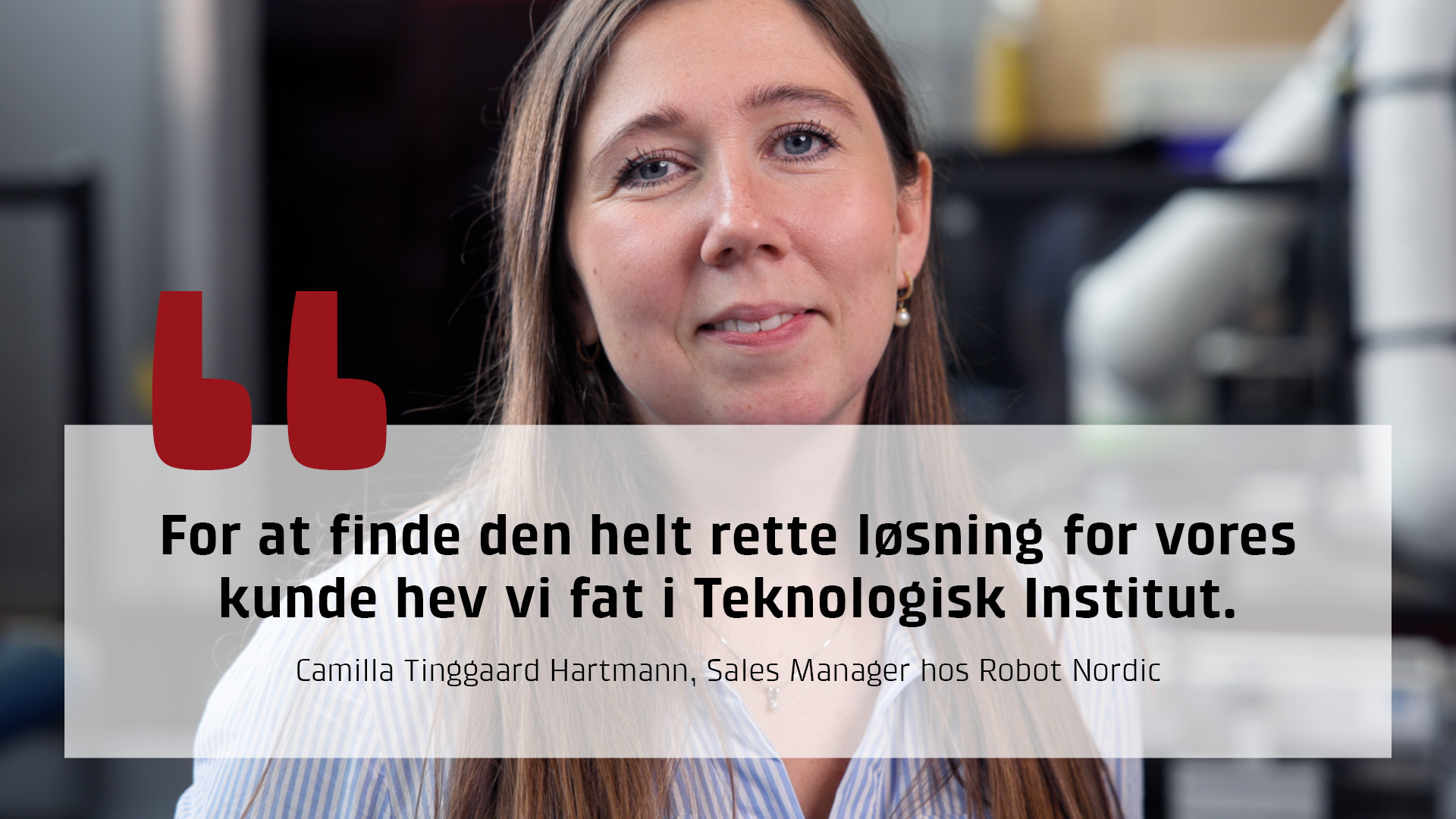
− This project has been incredibly exciting to work on. In order to find the right solution for our customer, we reached out to the Danish Technological Institute − to get their knowledge and skills on which solution would be the right one in relation to AI vision, says Camilla Tinggaard Hartmann.
From human hand to machine learning
In addition to 16 robots, vision and artificial intelligence are also a large part of the automation solution at Mette Munk – and this is where the Danish Technological Institute, led by senior specialist Michael Nielsen and technical manager Carsten Panch Isaksen, was brought in to give the system sharp, digital eyes.
Many different AI models have been used here, each with their own specialty.
− Based on thousands of images, we have now created a system that can in reality do the same thing as a human can, says technical manager at the Danish Technological Institute Carsten Panch Isaksen and continues:
− We have now used AI to sort and quality assess cakes, but you can also think of it in other contexts where items are not similar from time to time – foods that need to be sorted or quality assessed, which right now only humans can do.
Therefore, quality sorting is far from a simple task.
The system must not only recognize and distinguish between many product variants, but also be able to take into account the large variations that occur, for example, in the pattern of the icing, the placement of the filling, or whether a cake may be twisted a little differently than normal.
How cake quality control works
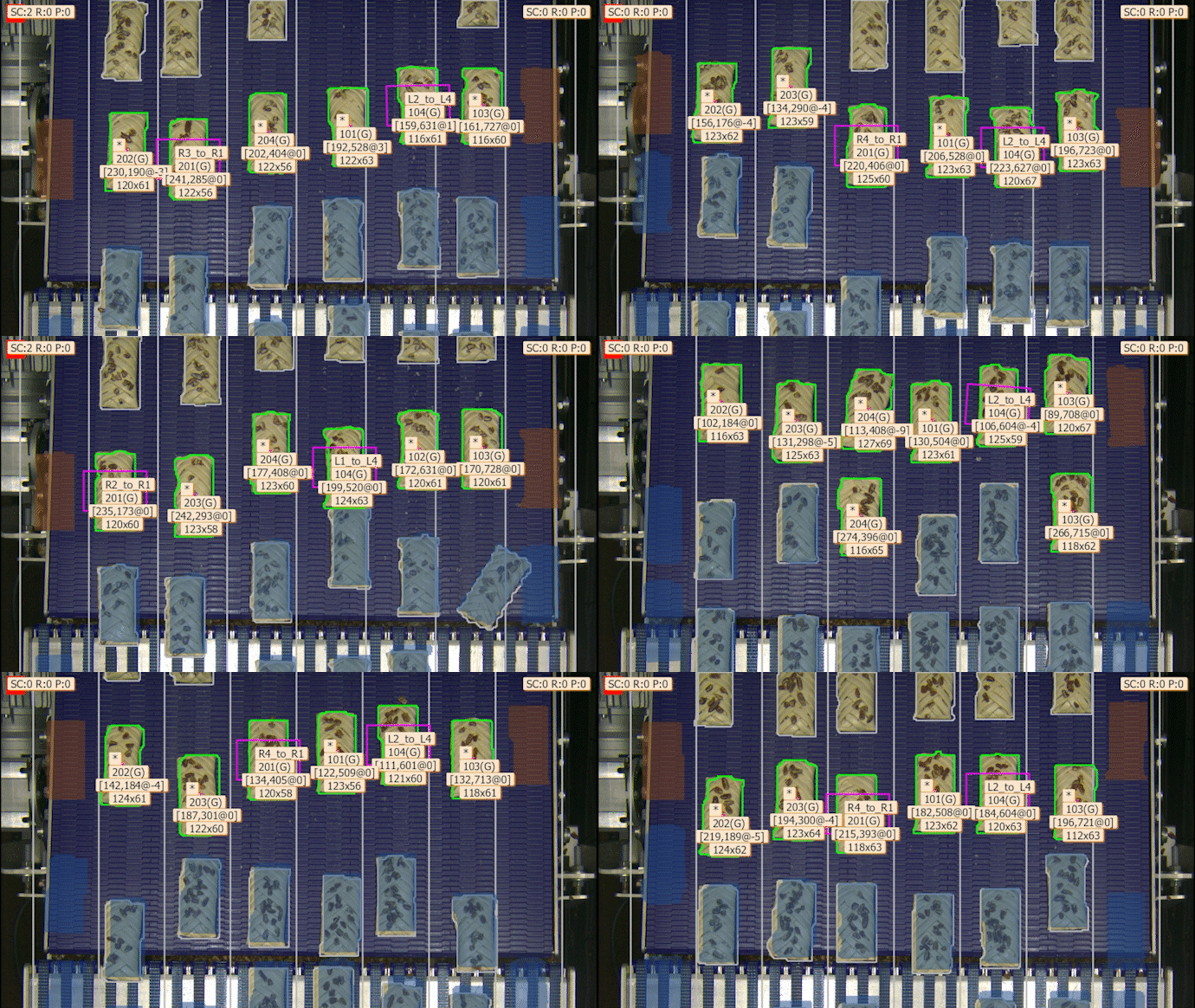
- The solution uses several different specialized AI models. One model can identify individual cakes, even when they are connected and regardless of the type of cake. Other models perform quality classification of each product type – for example, spandauers, cinnamon rolls or Vienna pecans.
- The system evaluates each cake for its unique parameters: shape (round, square, twisted, etc.), filling, icing and decorations, where variation in both quantity and location must be taken into account.
- The vision system is not only used for sorting. It projects real-time images of the positions of the cakes and robot grippers, so that it automatically finds the optimal cakes to move – and calculates where there is room on the line.
- The system evaluates approximately 24 cakes per scan – and can do so in half a second.
- The vision solution communicates dynamically with the packaging line’s PLC and is controlled via the HMI’s recipe management. This allows the process to be easily adapted to different products and packaging patterns.
- Sorting occurs in three quality levels, which are defined and trained on thousands of operator-stamped product images – and the system therefore performs quality control at the level of a trained human, only faster and more uniform.
Everyone can have a piece of the cake
The experience from Mette Munk is not limited to Odense.The collaboration between the bakery, Robot Nordic and the Danish Technological Institute has shown what future production can do – especially with the right collaboration.
− With the Danish Technological Institute’s AI and vision solution on the one hand, and our experience with robot automation on the other, we have set a new standard for what can be done in the food industry. It has been incredibly valuable to learn from each other along the way – and it has strengthened both the project and the collaboration, says Camilla Tinggaard Hartmann.
And Jeppe Holm backs her on this:
− It’s about getting a handle on all the details from the start – and choosing partners with the desire and ability to find the best solution.